Former gang leader sentenced to minimum 40 years for Tupac killing
Former gang leader Duane 'Keffe D' Davis sentenced to 40 years to life in prison for Tupac Shakur's 1996 murder.
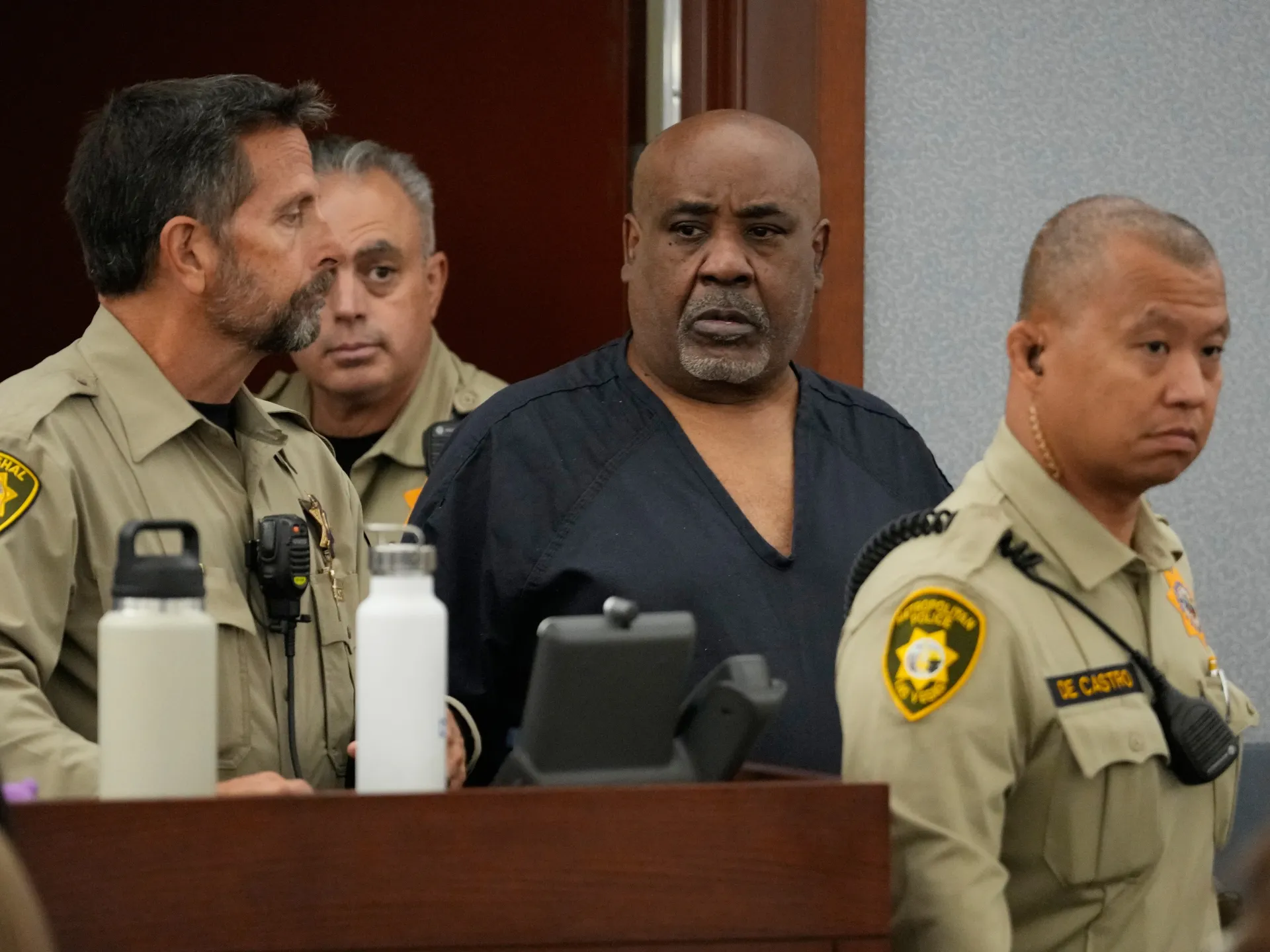
Former gang leader Duane 'Keffe D' Davis sentenced to 40 years to life in prison for Tupac Shakur's 1996 murder.
The full report
Duane 'Keffe D' Davis, a former gang leader, has been sentenced to 40 years to life in prison for his role in the 1996 murder of rapper Tupac Shakur. The sentencing marked the end of a 30-year-long cold case that had been one of the music industry's most notorious unsolved mysteries.
Davis, 63, was found guilty of first-degree murder with the use of a deadly weapon in August. He is the sole person charged in Shakur's death, which occurred when the rapper was 25 years old. Judge Carli Kierny announced Davis's sentence at a hearing in Las Vegas, Nevada.
The investigation into Shakur's death was hindered by a code of silence within street culture, which made some witnesses averse to police cooperation. Las Vegas police were also skeptical about leads from their Compton counterparts, given that the head of security for Shakur's record label was a former Compton cop.
Davis had long been a suspect in Shakur's murder, but investigators lacked evidence to pursue an indictment. However, after Davis publicly boasted about his involvement in media interviews and recounted his role in the murder in his 2019 memoir, Compton Street Legend, the investigation was able to move forward.
Prosecutor Marc DiGiacomo said that Davis was trying to profit from a killing that he committed, and for that, he deserves the maximum possible sentence. Davis had entered into a 2008 proffer agreement with federal law enforcement officers, granting him limited immunity for statements he made privately to investigators.
However, by repeating his statements outside his meetings with investigators, prosecutors said Davis had effectively voided the agreement's protections. Davis's sentencing has brought closure to Shakur's family, who had been seeking justice for decades.
Sekyiwa Shakur, Tupac's sister, described her brother as a father figure and said that his murder had led her to be hospitalized several times for depression, suicidal ideation, and PTSD. She and Shakur's stepbrother, Maurice Shakur, called for Davis to face the maximum penalty.
Read the source reports and compare their framing:
Continue reading
World desk ↗
What we know about the man who died falling from a Six Flags rollercoaster
Man dies after falling from Six Flags rollercoaster in Georgia

Tupac Shakur killer sentenced to 40 years in prison
Former gang leader Duane 'Keffe D' Davis sentenced to 40 years to life in prison for orchestrating the 1996 drive-by shooting death of hip-hop star Tupac Shakur.

Breaking: Surgery confirms Pope Leo has lung cancer
Pope Leo XIV undergoes surgery for lung cancer, Vatican confirms