As fertility rates fall, mums of three share joy and sacrifice of big families
Australian women share the challenges of having big families as fertility rates decline.
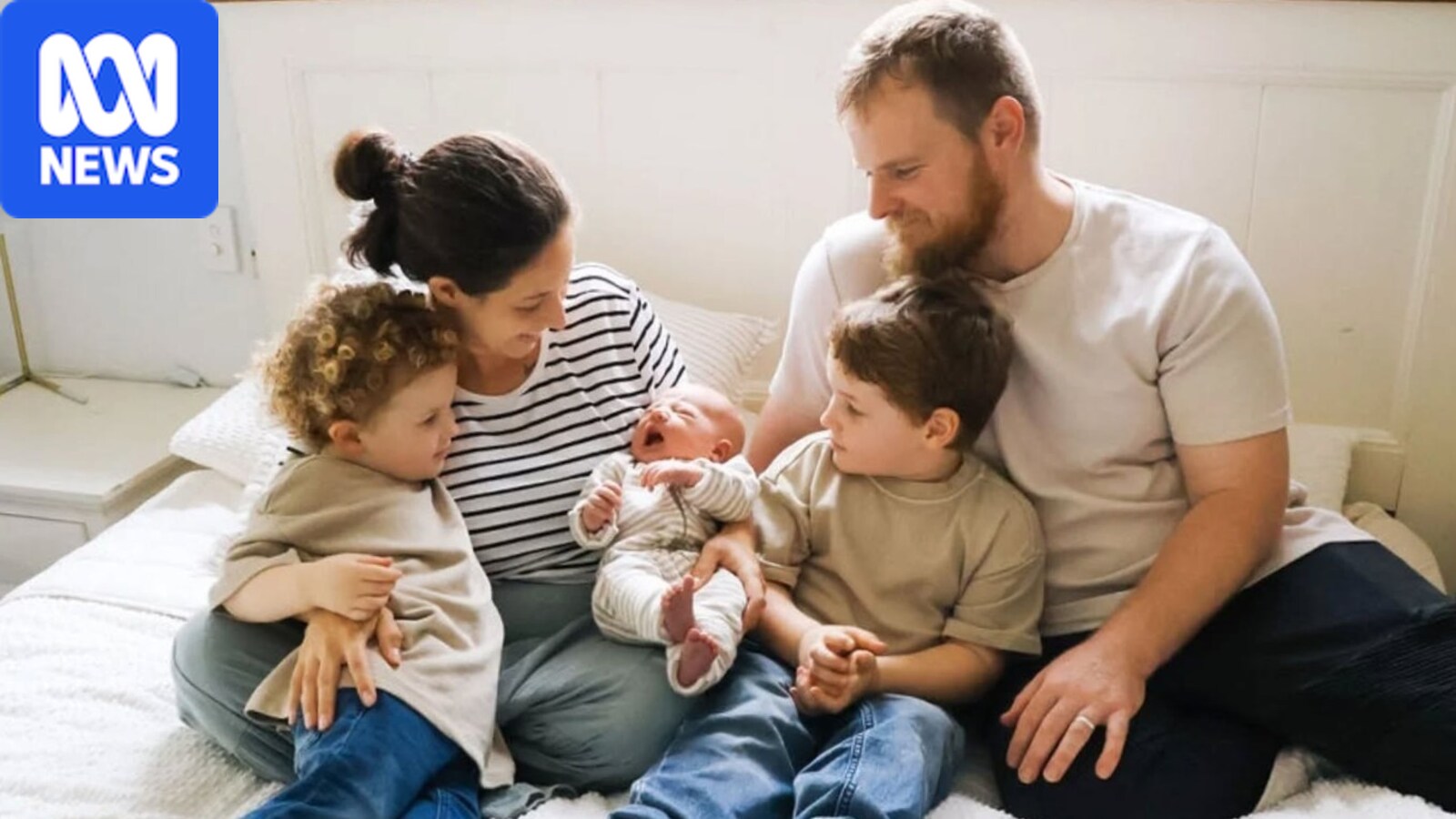
Australian women share the challenges of having big families as fertility rates decline.
The full report
Australia's fertility rates are falling, but some women are choosing to have bigger families despite the challenges. Dian Winata, a mother of three, is one such woman. She returned to work just two weeks after the caesarean birth of her third child, and only took one month off after the birth of her second child.
Ms Winata's decision to have three children was not driven by a desire to stay at home, but rather by financial necessity. As a non-permanent Australian resident at the time of her daughters' births, she was not eligible for government-funded parental leave and had used up her paid leave entitlements.
Ms Winata and her husband, Steven Halim, both work full-time to cover their mortgage and everyday living expenses for their children. They have a 11-year-old son and two daughters, aged six and four. Ms Winata works as an assistant service manager at an Adelaide childcare centre, where she receives a staff discount that helps to reduce childcare costs for her own children.
Ms Winata's experience is not unique. Many women are choosing to have bigger families, despite the significant trade-offs involved. As Australia's population ages, the challenges of raising a large family are becoming increasingly apparent.
Ms Winata's decision to have three children was motivated by love, but also by financial necessity. She and her husband had to work hard to earn their own money and save from scratch in Australia. Ms Winata often felt lonely growing up with one sibling, and wanted a bigger family to alleviate that feeling.
Ms Winata's story highlights the complexities of family planning in Australia. While some women are choosing to have bigger families, others are opting for smaller families due to the challenges involved. As Australia's fertility rates continue to decline, it is clear that family planning is a complex and multifaceted issue.
This report presents the named publisher’s account and has not yet been independently corroborated.
Continue reading
Politics desk ↗
White House press secretary Zacharia exiting role after short tenure
White House press secretary Katie Zacharia exits role after short tenure

KENYA CONFIRMS THIRD EBOLA CASE
Kenya confirms third case of Ebola, a relative of a man who died earlier this month after travelling from DR Congo.

'Well-known' man asks court to stop publication of sexual offence allegation
A 'well-known' individual has asked the High Court to prevent the publication of sexual offence allegations against him.