
China Expands Offshore Underwater Data Centres to Curb Land and Fresh Water Demands
New underwater server facilities powered by offshore wind and cooled by seawater are drawing interest across China, though researchers caution that their ecological impacts require careful study.
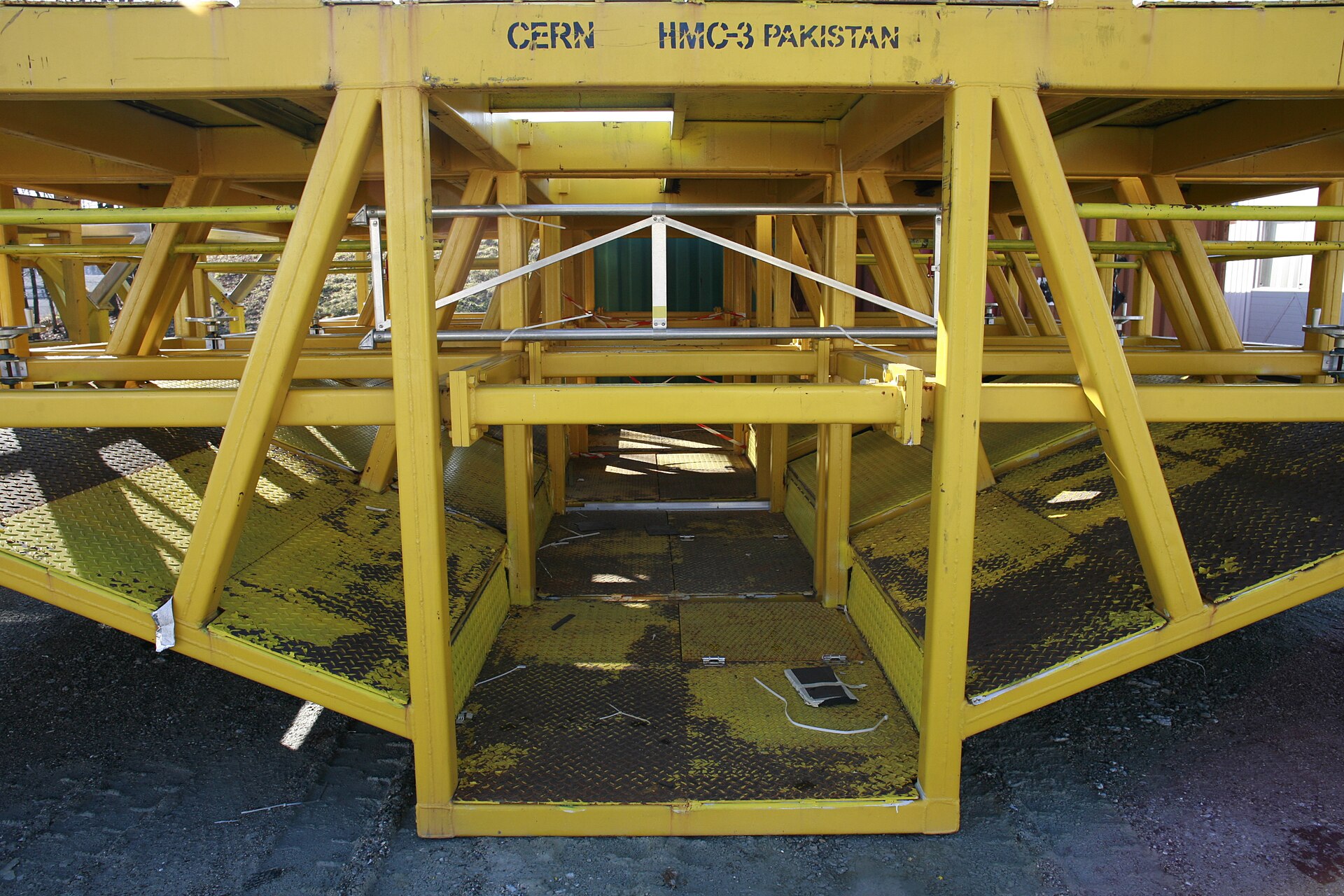
New underwater server facilities powered by offshore wind and cooled by seawater are drawing interest across China, though researchers caution that their ecological impacts require careful study.
The story
Positioned several kilometres off the coast of Shanghai, a yellow platform towers above the ocean amidst a cluster of offshore wind turbines. Directly linked to this surface structure is a data centre situated ten metres beneath the water. Designed to harness cool seawater, the facility bypasses the high energy and fresh water consumption typically required by land-based operations.
China’s smart economy and artificial intelligence sector are expanding rapidly. Data from the end of 2023 recorded 60 AI data centres operating or under construction nationwide, a figure that grew to 250 in subsequent tracking. Research published by the Beijing Institute of Technology indicates that domestic data centres will account for 4.8 percent of China's electricity consumption by 2030.
Cooling represents one of the largest electricity expenses for data centres outside of powering IT equipment directly. According to Yang Haosen, an associate professor at the Dalian University of Technology's School of Electrical Engineering, subsea installations utilizing seawater cooling reduce total power consumption by 18 percent to 28 percent for an equivalent amount of server power.
A closer look
The CNY 1.6 billion facility located off Shanghai's Lingang area is a collaborative initiative involving Shanghai HiCloud Technology alongside at least two state-owned enterprises. Chen Xiyi, project lead at HiCloud, stated that an equivalent 2.3-megawatt facility on land would consume approximately 40,000 tonnes of fresh water annually for cooling, an amount equivalent to the yearly usage of 100 households. By contrast, the Lingang installation utilizes no fresh water.
Shanghai HiCloud reports that direct integration with adjacent wind turbines supplies the underwater installation with 95 percent green electricity. Hu Zhenyu, director of the China Sustainable Development and Marine Economy Institute, noted that offshore data centres can absorb excess green power generated by wind farms when production surpasses local consumption or storage capacity.
Despite local governments expressing strong interest in pilot projects, experts urge caution regarding potential environmental consequences. The Lingang facility operates by pumping seawater into a heat exchanger to absorb internal facility heat before discharging the warmed water back out. Stephen Watson, a senior ecosystem services researcher at the Plymouth Marine Laboratory, warned that the released heat could trigger behavioural or biological changes in marine species residing nearby, particularly immobile organisms.
The wider picture
HiCloud has deployed similar technology elsewhere, including a commercial installation on the seabed of Qingshui Bay in Hainan developed in partnership with China Telecom and Alibaba Cloud's AI subsidiary. Company representatives report that the Hainan facility has operated for 40 months without failures or incidents, and plans are underway for subsequent deployment phases involving up to 100 total capsules.
This report presents the named publisher’s account and has not yet been independently corroborated.
Continue reading
Business desk ↗
Nvidia Shares Decline Following Board Inquiry Into Chief Executive Jensen Huang
Semiconductor company Nvidia's stock fell in early trading as the board investigates whether Chief Executive Jensen Huang was targeted by a Chinese intelligence operation.
Nvidia Examining Reports Regarding Former Data Centre Executive and US Intelligence Inquiries
Technology corporation Nvidia has stated it is reviewing matters following reports that US officials suspect a former data centre executive of intelligence gathering for China.
Nvidia Chief Faces Independent Board Review Following Revelations of Relationship With Woman Linked to Chinese Intelligence
Nvidia shares dropped over four percent after Chief Executive Jensen Huang acknowledged a relationship with a woman alleged by US officials to be a Chinese intelligence operative.