US Supreme Court to hear case on race in school admissions
US Supreme Court to hear case on race in school admissions
US Supreme Court to hear case on race in school admissions
The full report
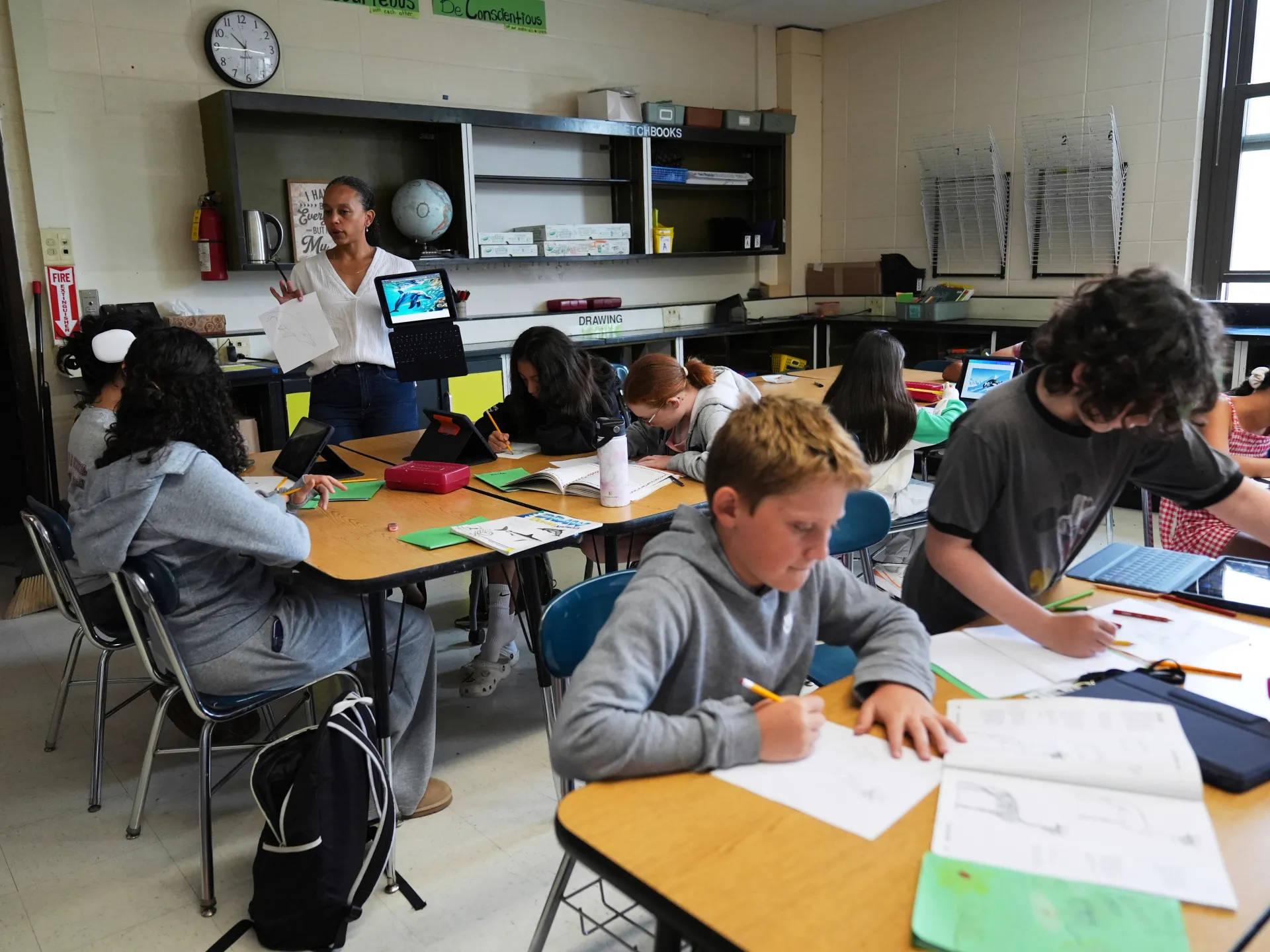
The United States Supreme Court has agreed to hear a case about the role of race in admissions to selective Maryland middle schools. A group of parents, represented by the Association for Education Fairness, claims that the local admission policy discriminates against Asian students in favour of Black and Latino students.
The Supreme Court will weigh whether the parent group has enough evidence of discrimination for the case to move forward. Lower courts previously dismissed the case because Asian-American students were not underrepresented at the specialised-curriculum schools compared with the pool of students that applied.
The Montgomery County school district's selection process was introduced in the 2021-2022 school year during the COVID-19 pandemic. It screens all students for academic potential, and then implements a lottery to randomly assign students from that pool to receive enriched instruction at either a magnet school or a local school.
The suit alleged that the screening process makes it harder for Asian-American students, who are clustered in 'high-performing, low-poverty elementary schools', to enter the lottery pool. Part of the process ranks a student's performance by comparing the student's test scores against those of other students whose family incomes are at a similar level.
The case was thrown out in 2022 by US District Judge Paula Xinis. She noted that the percentage of admitted Asian-American students exceeded the percentage of Asian Americans among all applicants to the magnet schools. Xinis also found no evidence that the lottery policy was implemented with discriminatory intent.
This report presents the named publisher’s account and has not yet been independently corroborated.
Continue reading
Politics desk ↗
Moves to bolster security after MP attack
Australian politicians consider increased security measures after attack on MP Helen Haines

SA remains committed to sending Australian of the Year to space
South Australia remains committed to sending Australian of the Year to space
Kumanjayi Little Baby review finds extensive failings
Northern Territory child protection sector faces widespread criticism after report reveals extensive failings in lead-up to Kumanjayi Little Baby's death.