The Stakes of Brazil’s Presidential Election
Brazil's presidential election is a global concern, with the outcome potentially affecting the Amazon rainforest and the planet's future.
Brazil's presidential election is a global concern, with the outcome potentially affecting the Amazon rainforest and the planet's future.
The full report
Brazilians will head to the polls on Sunday in one of the most consequential presidential elections of the last decade, according to The Intercept. The run-off election will determine the future of the largest democracy in Latin America and the fate of the Amazon rainforest. Incumbent President Luiz Inácio Lula da Silva is facing off against Flávio Bolsonaro, the son of former President Jair Bolsonaro, who is currently on house arrest for his role in a failed 2023 military coup. The elder Bolsonaro's attempted coup intended to assassinate Lula, his vice president, and a Supreme Court justice. Despite his father's actions, Flavio Bolsonaro is currently the frontrunner, after coming out slightly ahead in the first round of voting.
The stakes are high, with Flávio Bolsonaro's potential win potentially allowing his father to avoid jail time and his brother, Eduardo, to avoid a multiyear prison sentence for his actions in the U.S. lobbying against Brazil's foreign interests, says Andrew Fishman, a Rio de Janeiro-based investigative journalist. Fishman argues that the Bolsonaro family is willing to do whatever it takes to win the election, as it is their only get-out-of-jail-free card.
The election is not just a domestic issue, but a global one, with the outcome potentially affecting the Amazon rainforest and the planet's future, says Fishman. Jair Bolsonaro oversaw significant deforestation of the Amazon rainforest, leaving the ecological and climate linchpin in danger of becoming a
President Donald Trump has taken a particular interest in the race, as he seeks to expand U.S. influence and control across the Western Hemisphere. Fishman argues that if Brazil falls, the rest of the continent will follow, but if Brazil remains as a big island of resistance, it will mess up the Trump administration's plans.
Big Tech is also looming large over the race, with Fishman suggesting that Meta is interfering in the election and has every incentive to do so. Meta has denied these allegations, stating that they apply the same rules to every candidate and do not suppress content to disadvantage one side.
The United States is slowly becoming more and more like Brazil, says Fishman, arguing that it's not that Brazil is becoming more like the United States, but rather the other way around. This is a concerning trend, as it suggests that the United States is adopting some of the same authoritarian and anti-democratic tendencies that have characterized Brazil's government under the Bolsonaro regime.
Continue reading
Defence desk ↗
North Korean leader Kim Jong Un arrived in China's border city
North Korean leader Kim Jong Un arrives in China's border city of Dandong via newly opened bridge

Smith v Puello world title fight predictions
World Series predictions: Will the Rays or Brewers claim their first title?
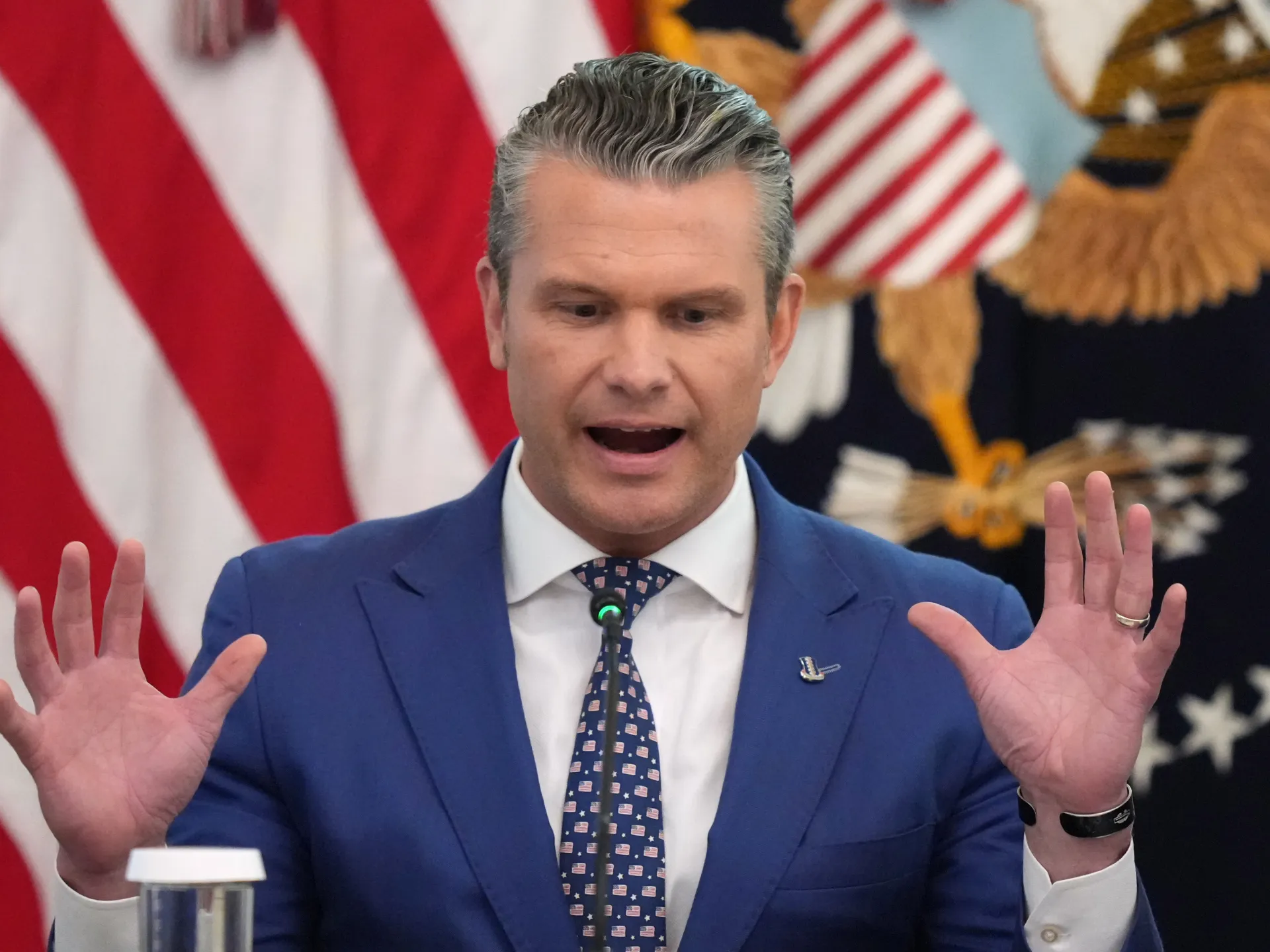
Pentagon designates Confucius Institutes a national security threat
US Defense Secretary Pete Hegseth designates Confucius Institutes a national security threat.