‘Influence without enforcement’: Indonesia’s fires test Singapore’s anti-haze law
Singapore's anti-haze law is being tested as the country deals with its longest streak of unhealthy air since the 2015 Southeast Asian haze crisis.
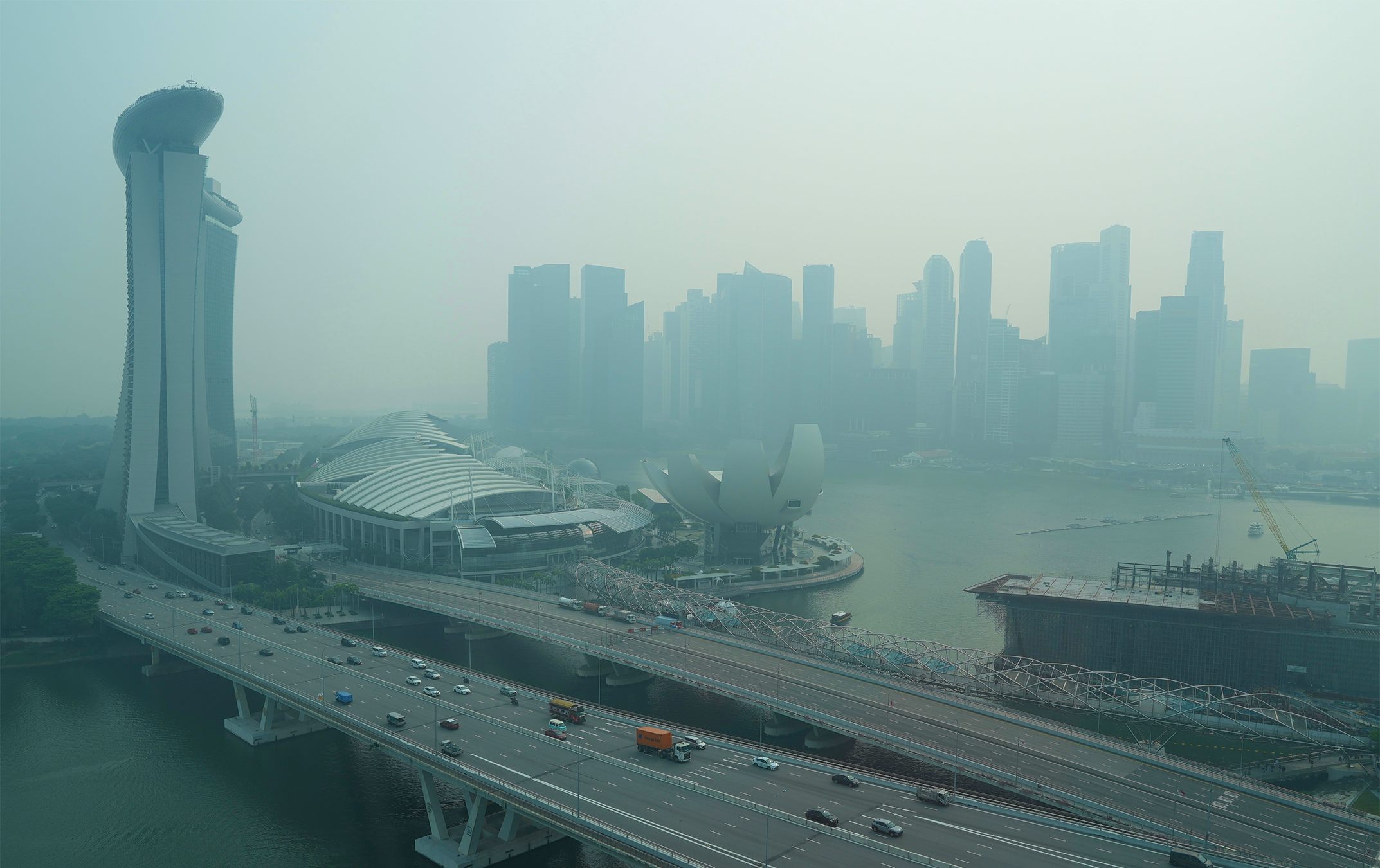
Singapore's anti-haze law is being tested as the country deals with its longest streak of unhealthy air since the 2015 Southeast Asian haze crisis.
The story
Singapore has served notices to 20 firms linked to Indonesia's fires, but has stopped short of taking further legal action.
Half of the notices were sent to concession holders in Sumatra and Kalimantan where the fires originated, while the other half went to Singapore-based entities with ties to them.
Of the 10 Indonesian plantation companies identified, three of them — PT Bumi Andalas Permai, PT Bumi Mekar Hijau and PT SBA Wood Industries — have had separate investigations open against them by Singaporean authorities since 2015, with no public outcome.
A closer look
The other six companies issued the notices requiring them to act against fires are PT Paramitra Mulia Langgeng, PT Sumatera Alam Anugerah, PT Hutan Lestari Raya, PT Bangkanesia, PT Mananjung Hayak and PT Baratama Putra Perkasa.
A spokesperson from Singapore's National Environmental Agency told Mongabay by email it could not disclose further details into existing investigations.
The agency did not respond to questions as to whether it would escalate against repeat offenders.
The wider picture
Singapore-headquartered APP, Singapore-listed First Resources and Bumitama Agri, and privately held First Borneo Plantations, whose ownership is tied to Singapore, already appear to be linked to the haze-causing fires in Indonesia, Singapore's senior minister K Shanmugam said on Oct. 19.
APP's green label — reinstated in 2019 after being suspended during the 2015 haze episode — was temporarily restricted by the Singapore Environment Council on Oct. 18, raising the possibility that its products could be pulled from supermarket shelves, as happened in 2015.
The Ministry of Law has since set up a specialist panel of legal, audit and investigative firms to aid in its probe, with further updates expected this week.
Further detail
Singapore became the first country in the world to pass a law allowing it to punish foreign entities for causing cross-border air pollution in 2014.
Under the Transboundary Haze Pollution Act (THPA), companies found guilty of causing or condoning fires that affect Singapore's air quality can be fined up to 100,000 Singapore dollars ($77,951) a day, capped at 2 million Singapore dollars ($1.6 million).
Despite several major fire episodes blanketing the city-state with haze since 2015, it has yet to bring any charges or impose any penalties under the act.
This report presents the named publisher’s account and has not yet been independently corroborated.
Continue reading
Politics desk ↗
Donald Trump Jr. went hunting in Mongolia with a Kremlin-linked Russian businessman who helped bankroll his wedding
Donald Trump Jr. went on a hunting trip in Mongolia with a Kremlin-linked Russian businessman who helped bankroll his wedding.

Mbappé sorry for 'ill-judged' Mao remark after backlash in China
Kylian Mbappé apologises for comments about Mao Zedong, sparking backlash in China.
Finnish and Norwegian leaders spoke with Putin by phone about ending war in Ukraine
Finnish and Norwegian leaders spoke with Putin by phone about ending war in Ukraine, following a meeting in Oslo between Trump's special envoy and Ukrainian President Volodymyr Zelensky.