Nobel Prize in Economics goes to pair of US economists
US economists Robert E. Hall and Michael Woodford win the 2026 Nobel Prize in Economics for developing new economic models that help governments and central banks respond to booms and recessions.

US economists Robert E. Hall and Michael Woodford win the 2026 Nobel Prize in Economics for developing new economic models that help governments and central banks respond to booms and recessions.
The full report
The Royal Swedish Academy of Sciences has awarded the 2026 Nobel Prize in Economic Sciences to US economists Robert E. Hall and Michael Woodford. The pair was recognized for their work in developing economic models that help governments and central banks respond more effectively to booms and recessions.
Hall and Woodford's models are based on a microeconomic foundation, which breaks with the longstanding Keynesian models developed by economist John Maynard Keynes almost a century ago. The Royal Swedish Academy of Sciences argued that decades of applying the Keynesian models showed their limitations, including failing to curb unemployment and instead raising inflation.
The pair's work has provided a stable theoretical foundation for the models that are now used by central banks and governments around the world. With their models, policymakers are better equipped to deal with shocks in the economy, such as energy crises or sudden changes in how much households consume.
Hall and Woodford's models have been used to develop forward guidance, where central bankers communicate where they expect interest rates to be in the future. This tool has been important in steering the global economy away from the risk of a second great depression, as seen after the 2008 financial crisis and the Covid pandemic.
The economics prize is formally known as the Bank of Sweden Prize in Economic Sciences in Memory of Alfred Nobel. The prize is worth a combined $1.2m and consists of a diploma, a gold medal, and a cheque.
Hall and Woodford's work has improved on John Maynard Keynes's stabilisation models, which struggled to handle the impact of the oil shock in the 1970s. Their models demonstrate how traditional models can be reconstructed, based on how individual households and businesses collectively affect an economy through their actions.
Reporting status
This original NewNWS report was drafted from the cited source material and passed a second evidence check. Claims that remain the account of one publisher are attributed in the source disclosure below.
This automated report was published after independent coverage matched. Read the source reports and compare their framing:
Continue reading
Business desk ↗
Roofing scammers con homeowners out of thousands of pounds
Homeowners warned of roofing scams as Citizens Advice reports surge in complaints.
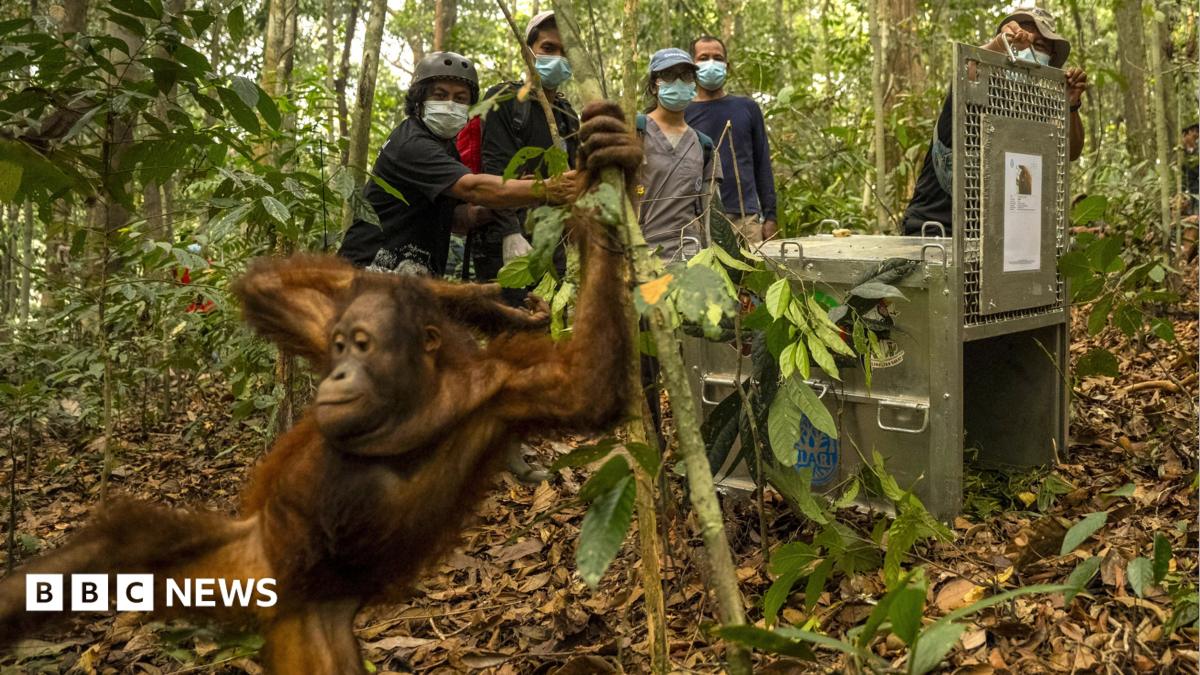
Orangutans released back into Borneo forest after devastating fires
Eight orangutans have been released back into the wild in Borneo after being rescued from devastating wildfires.

‘You have a meeting’: the calendar phishing scam growing exponentially
Calendar phishing scams are growing exponentially, with scammers using legitimate platforms and AI-backed blockers to evade detection.