Brazilians vote in presidential election runoff pitting leftist Lula against far-right Bolsonaro
Brazil's presidential runoff pits leftist Lula against far-right Bolsonaro

Brazil's presidential runoff pits leftist Lula against far-right Bolsonaro
The full report
Brazilians are going to the polls on Sunday in a highly unpredictable runoff in which the leftist president, Luiz Inácio Lula da Silva, is attempting an unprecedented comeback against the far-right senator Flávio Bolsonaro, who won the first-round vote. Bolsonaro’s surprise victory despite not leading most polls made him the favourite three weeks ago, but since then Lula’s campaign has gained ground, and the two go into the contest virtually tied. The gap between them was the narrowest ever recorded in a first round, at less than 2% of the vote, and the 80-year-old president has spent much of the runoff campaign focused on turnout – abstention reached a record high in the first round and disproportionately affects his voters – and on stoking fears over what a return to power by a member of the Bolsonaro family could mean. A congressman for more than 20 years with few bills passed, the 45-year-old Bolsonaro is the eldest son of the former president Jair Bolsonaro, who is under house arrest serving a 27-year sentence for attempting a coup to overturn his 2022 defeat to Lula. “I think the time has come for real change,” said Bolsonaro after voting on Sunday morning at a school in Rio de Janeiro’s north zone. “Brazil can’t take another four years the way things are ... Everyone’s life has got worse.” Lula voted in São Bernardo do Campo, the industrial city where his political career began nearly half a century ago, and said he had “never seen anything like” the leftist demonstrations – many emerging organically among young people – that swept the country in support of him during the runoff. “What the people have done for me in these past few days is something I can never repay. It is so much generosity, so much affection, so much love. I will be eternally grateful,” said Lula, adding that he was “confident” the people would not choose Bolsonaro. The senator has promised that if elected he will pardon his father, and with an even more conservative congress taking office next year, he has vowed to “change the constitution and re-democratise this country”, sending chills through those who fear he could follow in his father’s authoritarian footsteps. “We’re facing two completely different projects for the country,” said voter Nuno Rau, 63, an architect and writer. “One points towards the end of social rights and the end of democracy itself; on the other side is someone who fought for income distribution and free public education. I may have criticisms of Lula, but there is no way to choose Bolsonaro,” he added. Aparecida Moreira, a 62-year-old lawyer, will vote for Bolsonaro mainly because of the “iron fist” security policy he proposes, including building five “mega-prisons” inspired by those of El Salvador’s populist autocrat Nayib Bukele. “I agree with Bolsonaro’s idea of chemical castration for rapists, because there is no crime worse than rape,” said Moreira, adding that voting for Lula would be the same as voting for the “dictator” Alexandre de Moraes, the justice who, despite not having been appointed by Lula, is widely associated with him by Bolsonaro supporters because he oversaw the former president’s conviction. Both Flávio Bolsonaro and Lula drew large crowds to their final campaign rallies on Saturday in Rio de Janeiro, São Paulo and Belo Horizonte. In northern Minas Gerais state, Iara Pimentel, a councillor from Lula’s party, suffered facial injuries and had to be taken to hospital after the motorcade in which she was travelling was hit by glass bottles and bricks thrown by Bolsonaro supporters. “It is unacceptable for people to be attacked for expressing their political views,” Pimentel posted after leaving hospital. With each side of supporters virtually “crystallised”, the election will be decided by the small number of voters who identify with neither candidate. Bolsonaro began the runoff campaign with a lead and the support of most other defeated candidates, but instead of growing, he stagnated in the polls.
Read the source reports and compare their framing:
Continue reading
Politics desk ↗
Serbia votes as strongman Vučić faces grassroots challenge to 12-year rule – Europe live
Serbia votes as strongman Vučić faces grassroots challenge to 12-year rule

Serbia election: Can student-led opposition end Aleksandar Vucic's grip on power?
Serbians vote in a closely contested election that could bring an end to Aleksandar Vucic's grip on power.
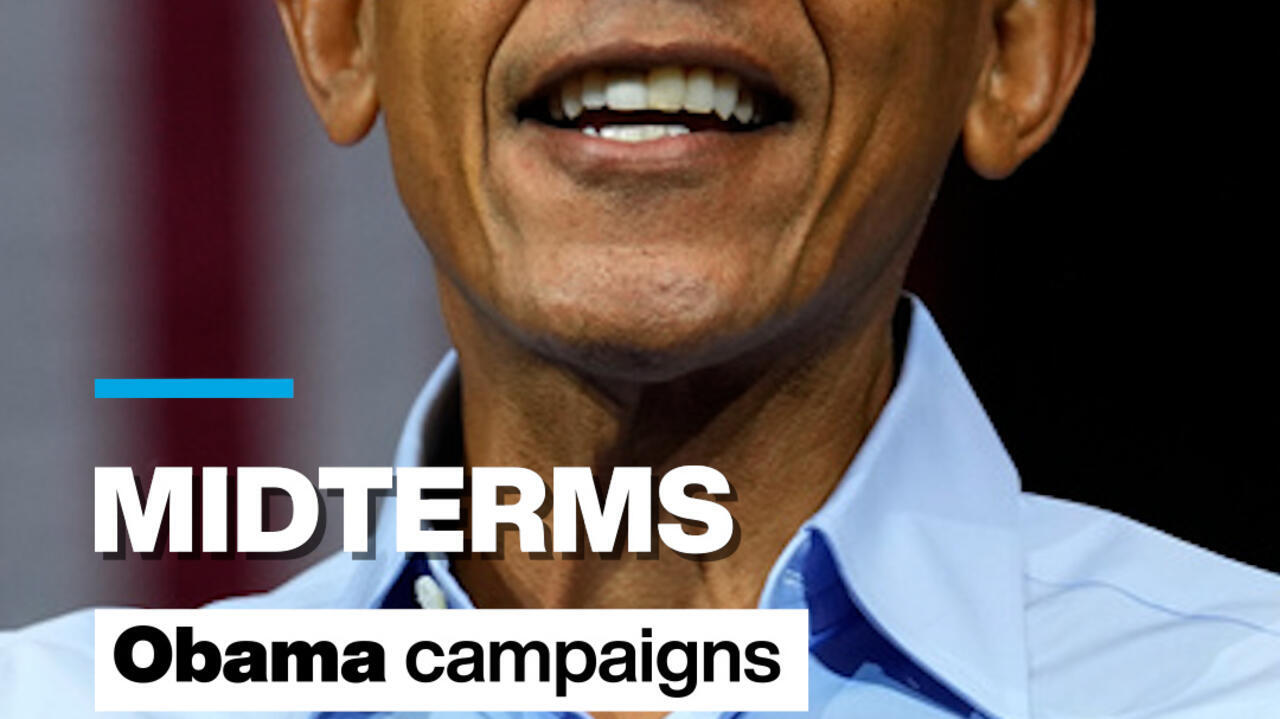
Midterms: Obama campaigns for Democrats, slams Trump
Former US President Barack Obama campaigns for Democrats ahead of the US midterms, criticising Donald Trump over the war with Iran and high consumer prices.